

Senior Eye Exams
Eye exams for those 65 years and older
Eye examinations are vital for your eye health. We believe that delivering the best vision will increase the quality of your health, and in turn the quality of your life.
Why are geriatric eye exams so important?
As you age, your risk of eye disease and vision problems rises. If you notice any unusual visual symptoms, it’s wise to have an eye exam performed as soon as possible by an eye care professional. Additionally, many common ocular conditions associated with aging can linger for a long time without symptoms, yet still causing damage. This underscores the importance of routine geriatric eye exams, which can detect signs of disease before you do! The earlier an eye disease is diagnosed, the earlier treatment can begin. This goes a long way towards preventing blindness, partial vision loss and complications.
When should older adults have comprehensive eye exams?
According to the American Academy of Ophthalmology, adults age 65 and older should have their eyes evaluated thoroughly every year or two. Many common eye diseases, such as glaucoma and diabetic retinopathy, are silent at the beginning and progress very slowly. Experts have estimated that approximately half of the American senior population has glaucoma and doesn’t know it.
Certain health conditions, such as hypertension and diabetes, point to a need for more frequent eye exams. Other risk factors include a serious past eye injury, personal family history of eye disease, being African American (has a higher risk of glaucoma) and specific medications. Your eye doctor should be consulted regarding how often to schedule a geriatric eye exam.

What are some eye symptoms that need an eye exam immediately?
If you, or a senior in your care, experience any of the following symptoms, an eye examination should be reserved as soon as possible. These may be signs that a serious condition has developed.
- Seeing flashes of light or new floaters
- Excessive tearing or discharge
- Vision loss, including blind spots or a dark spot in the center field of vision
- A change in the eye’s appearance, such as crossed-eyes, bumps, bulging or swelling
- Double vision
- Seeing halos
- Blurred or cloudy vision
- Straight lines appearing wavy
- Eye pain or fatigue
- Inability to close eyelid
- Burning or itchiness
What tests are performed in a geriatric eye exam?
Your eye doctor will pay special attention to inspect for signs of age-related ocular diseases, such as glaucoma, cataracts, macular degeneration and diabetic retinopathy. The procedures that will be done are not painful.
Here are the basic steps of what will happen in an eye exam for seniors:
- 1. An evaluation of the outside of your eyes
- 2. Visual acuity testing: you will need to read a standard eye chart of letters, placed at 20 feet away, first covering one eye and then the other eye. This will determine your vision prescription or need for eyeglasses.
- 3. Refraction assessment: by checking how light waves are bent when they pass through your cornea and lens, an eye doctor will be able to diagnose nearsightedness, farsightedness, presbyopia and astigmatism. This procedure is done by having you look through a series of lenses to provide feedback about which lens is clearest.
- 4. Visual field testing: peripheral (side) vision is checked using a computer that flashes lights on either side of you
- 5. Color Vision: you’ll be tested for color blindness by looking at images formed by multicolored dots and stating what you can see
- 6. Eye mobility: eye muscle movement will be assessed by having you move your eyes in different directions
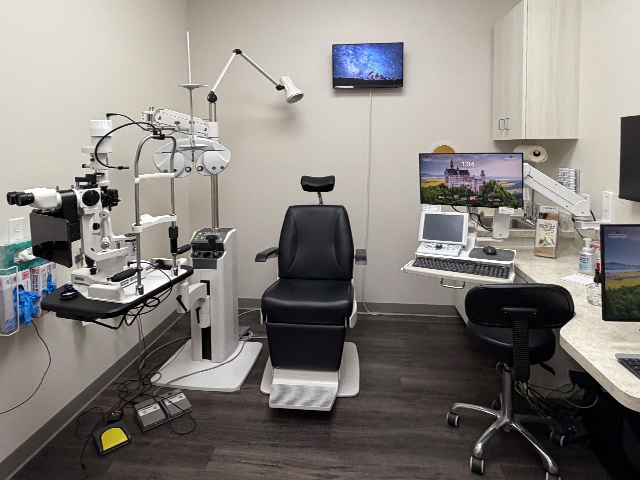
- 7. Ocular health: your eye doctor will use a slit lamp, which is a magnifying tool, to inspect all the parts of your eyes, such as the iris, cornea, retina, macula and optic nerve. Dilating eye drops may be inserted to enable a comprehensive examination of the back of your eyes
- 8. Glaucoma testing: a specialized test, using tonometry, is performed to measure the inner fluid pressure of your eye

Managed and Designed by
